Secondary School Teachers, Except Special and Career/Technical Education in Georgia
Considering working as a Secondary School Teachers, Except Special and Career/Technical Education in Georgia? Here’s what the data says. Teach one or more subjects to students at the secondary school level. Excludes “Career/Technical Education Teachers, Secondary School” (25-2032), “Special Education Teachers” (25-2050), and “Substitute Teachers, Short-Term” (25-3031).
What do Secondary School Teachers, Except Special and Career/Technical Education Make in Georgia?
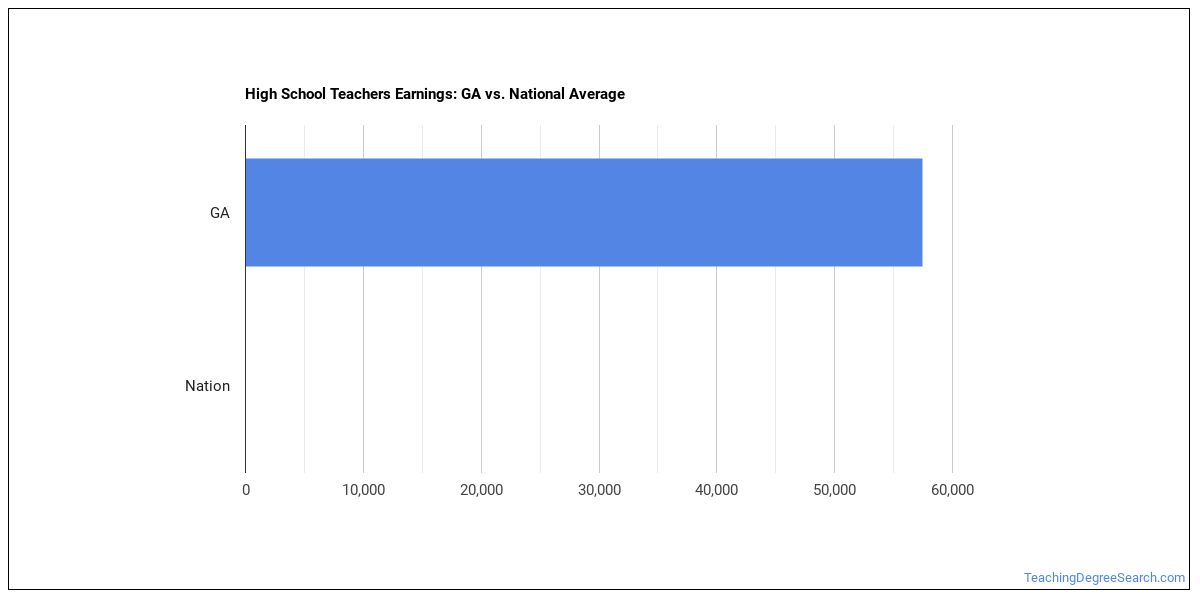
For a secondary school teachers, except special and career/technical education working in Georgia, the typical annual salary is $73,340 per year.Earnings range from $48,530 at the 10th percentile to $94,140 at the 90th percentile.
| Wage Statistic | Annual | Hourly |
|---|---|---|
| 10th percentile | $48,530 | n/a |
| 25th percentile | $60,320 | n/a |
| Median (50th) | $73,340 | $0.00 |
| 75th percentile | $77,210 | n/a |
| 90th percentile | $94,140 | n/a |

The location quotient — a measure of how concentrated this occupation is in Georgia compared to the national average — is 0.68, suggesting fewer secondary school teachers, except special and career/technical education per worker than the national average.
National Wage Comparison
Nationally, secondary school teachers, except special and career/technical education earn a median of $77,927 per year ($37.47/hour), below the Georgia median.
Employment Outlook
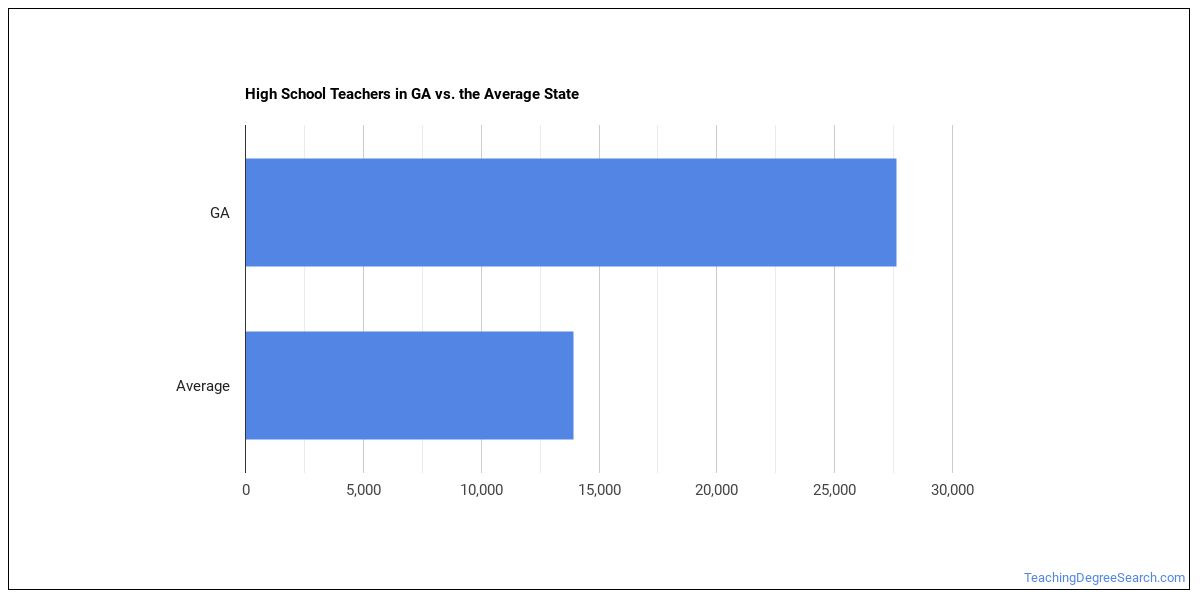
Nationally, total employment in this occupation is 561,804 secondary school teachers, except special and career/technical education in the U.S.. In Georgia alone, approximately 22,870 people work in this role. That’s higher than the typical state, which employs around 14,730 secondary school teachers, except special and career/technical education.

Top Georgia Metros for Secondary School Teachers, Except Special and Career/Technical Education
These are the Georgia metros with the most secondary school teachers, except special and career/technical education in Georgia.
| Metro Area | Number Employed | Annual Median Salary |
|---|---|---|
| Atlanta-Sandy Springs-Roswell, GA | 12,100 | $76,080 |
| Augusta-Richmond County, GA-SC | 1,270 | $63,040 |
| Savannah, GA | 860 | $61,830 |
| Columbus, GA-AL | 690 | $61,270 |
| Gainesville, GA | 600 | $60,670 |
| Warner Robins, GA | 510 | $74,950 |
| Athens-Clarke County, GA | 500 | $64,630 |
| Macon-Bibb County, GA | 470 | $62,650 |
| Dalton, GA | 400 | $62,280 |
| Valdosta, GA | 390 | $61,780 |
| Rome, GA | 260 | $64,010 |
Top States for Secondary School Teachers, Except Special and Career/Technical Education Employment
The table below shows the states where the most secondary school teachers, except special and career/technical education work.
| State | Number Employed |
|---|---|
| Texas | 112,300 |
| California | 96,050 |
| New York | 76,730 |
| Pennsylvania | 52,650 |
| Ohio | 51,470 |
| Illinois | 47,890 |
| Florida | 47,040 |
| New Jersey | 34,510 |
| North Carolina | 32,260 |
| Massachusetts | 29,100 |
| Virginia | 28,580 |
| Michigan | 24,380 |
| Arizona | 24,100 |
| Georgia | 22,870 |
| Indiana | 21,560 |
| Tennessee | 21,250 |
| Missouri | 20,850 |
| Colorado | 18,160 |
| Maryland | 18,140 |
| Wisconsin | 18,060 |
Highest-Paying States for Secondary School Teachers, Except Special and Career/Technical Education
Where secondary school teachers, except special and career/technical education earn the most: secondary school teachers, except special and career/technical education.
| State | Annual Median Salary |
|---|---|
| Washington | $99,640 |
| California | $98,710 |
| New York | $98,370 |
| Rhode Island | $89,040 |
| Massachusetts | $88,990 |
| New Jersey | $80,440 |
| Oregon | $79,600 |
| District of Columbia | $78,770 |
| Pennsylvania | $77,990 |
| Alaska | $77,730 |
Skills
Top secondary school teachers, except special and career/technical education skills, rated on an importance scale of 0 to 5:
Knowledge Areas
Key knowledge areas for this occupation, rated on an importance scale of 0 to 5:
Abilities
Key abilities for secondary school teachers, except special and career/technical education, rated on an importance scale of 0 to 5:
Daily Tasks
Day-to-day, secondary school teachers, except special and career/technical education typically:
- Prepare students for later grades by encouraging them to explore learning opportunities and to persevere with challenging tasks.
- Instruct through lectures, discussions, and demonstrations in one or more subjects, such as English, mathematics, or social studies.
- Establish and enforce rules for behavior and procedures for maintaining order among students.
- Prepare materials and classrooms for class activities.
- Adapt teaching methods and instructional materials to meet students' varying needs and interests.
- Prepare, administer, and grade tests and assignments to evaluate students' progress.
- Establish clear objectives for all lessons, units, and projects, and communicate those objectives to students.
- Observe and evaluate students' performance, behavior, social development, and physical health.
- Plan and conduct activities for a balanced program of instruction, demonstration, and work time that provides students with opportunities to observe, question, and investigate.
- Guide and counsel students with adjustments, academic problems, or special academic interests.
- Use computers, audio-visual aids, and other equipment and materials to supplement presentations.
- Prepare objectives and outlines for courses of study, following curriculum guidelines or requirements of states and schools.
Work Activities
- Training and Teaching Others
- Coaching and Developing Others
- Making Decisions and Solving Problems
- Establishing and Maintaining Interpersonal Relationships
- Developing Objectives and Strategies
- Working with Computers
- Communicating with Supervisors, Peers, or Subordinates
- Organizing, Planning, and Prioritizing Work
- Getting Information
- Thinking Creatively
- Updating and Using Relevant Knowledge
- Assisting and Caring for Others
Tools & Technology
Technologies frequently used: Hot technologies: Microsoft Excel
What Major Will Prepare You For This Career?
Programs that train for this career include:
- Teacher Education Subject Specific
- Teacher Education Grade Specific
- Teaching English or French
- Multilingual Education
Featured schools near , edit
Related Careers
Other careers like secondary school teachers, except special and career/technical education include:
- Education Teachers, Postsecondary
- Art, Drama, and Music Teachers, Postsecondary
- English Language and Literature Teachers, Postsecondary
- Kindergarten Teachers, Except Special Education
- Elementary School Teachers, Except Special Education
- Middle School Teachers, Except Special and Career/Technical Education
Also Known As
Accounting Teacher, After School Teacher, Algebra Teacher, Art Educator, Art Instructor, Art Teacher, Arts and Crafts Teacher, Athletic Instructor, Athletics Teacher, Band Teacher, Bilingual Teacher, Biology Teacher, Ceramics Teacher, Chemistry Teacher, Choir Teacher.
References
- U.S. Bureau of Labor Statistics, Occupational Employment and Wage Statistics — https://www.bls.gov/oes/
- O*NET Online — https://www.onetonline.org/
- BLS Employment Projections — https://www.bls.gov/emp/
- O*NET-SOC code: 25-2031.00

TeachingDegreeSearch.com provides higher-education, college and university, degree, program, career, salary, and other helpful information to students, faculty, institutions, and other internet audiences. Presented information and data are subject to change. Inclusion on this website does not imply or represent a direct relationship with the company, school, or brand. Information, though believed correct at time of publication, may not be correct, and no warranty is provided. Contact the schools to verify any information before relying on it. Financial aid may be available for those who qualify. The displayed options may include sponsored or recommended results, not necessarily based on your preferences.
© TeachingDegreeSearch.com – All Rights Reserved.