Interpreters and Translators in Vermont
Considering working as an Interpreters and Translators in Vermont? Here’s what you need to know. Interpret oral or sign language, or translate written text from one language into another.
What do Interpreters and Translators Make in Vermont?
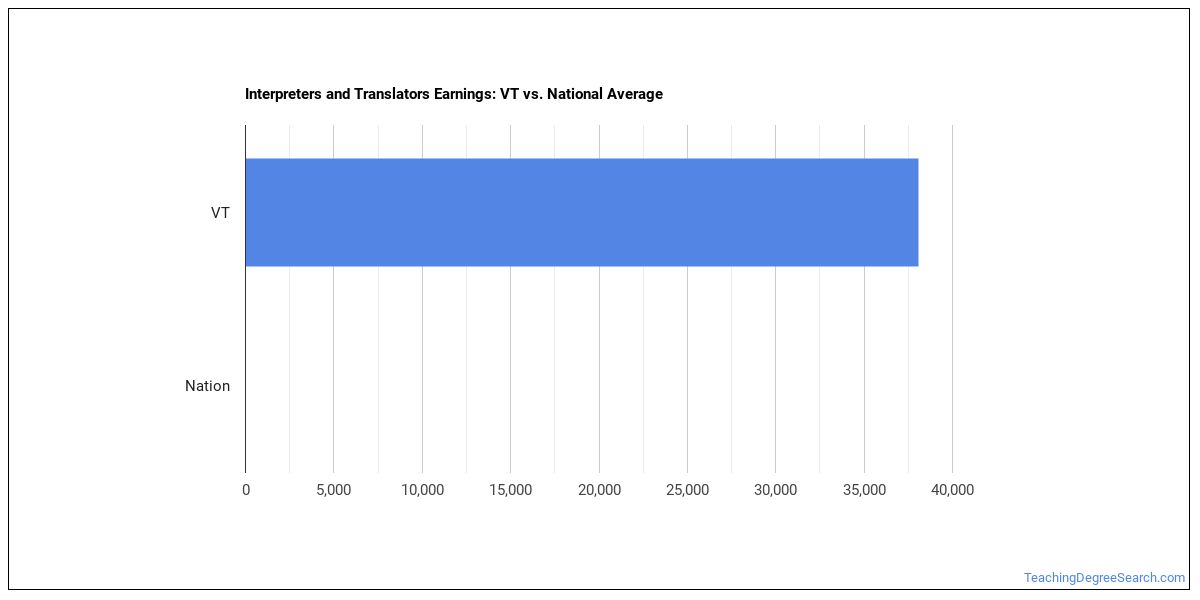
The interpreters and translators working in Vermont, the typical annual salary is $60,210 per year (or roughly $28.95/hour).Earnings range from $49,210 at the 10th percentile to $108,130 at the 90th percentile.
| Wage Statistic | Annual | Hourly |
|---|---|---|
| 10th percentile | $49,210 | $23.66 |
| 25th percentile | $59,380 | $28.55 |
| Median (50th) | $60,210 | $28.95 |
| 75th percentile | $108,130 | $51.99 |
| 90th percentile | $108,130 | $51.99 |

The job concentration index in Vermont compared to the national average — is 0.77, indicating fewer interpreters and translators per worker than the national average.
National Wage Comparison
Nationally, interpreters and translators earn a median of $52,627 per year ($25.30/hour), higher than the Vermont median.
Employment Outlook
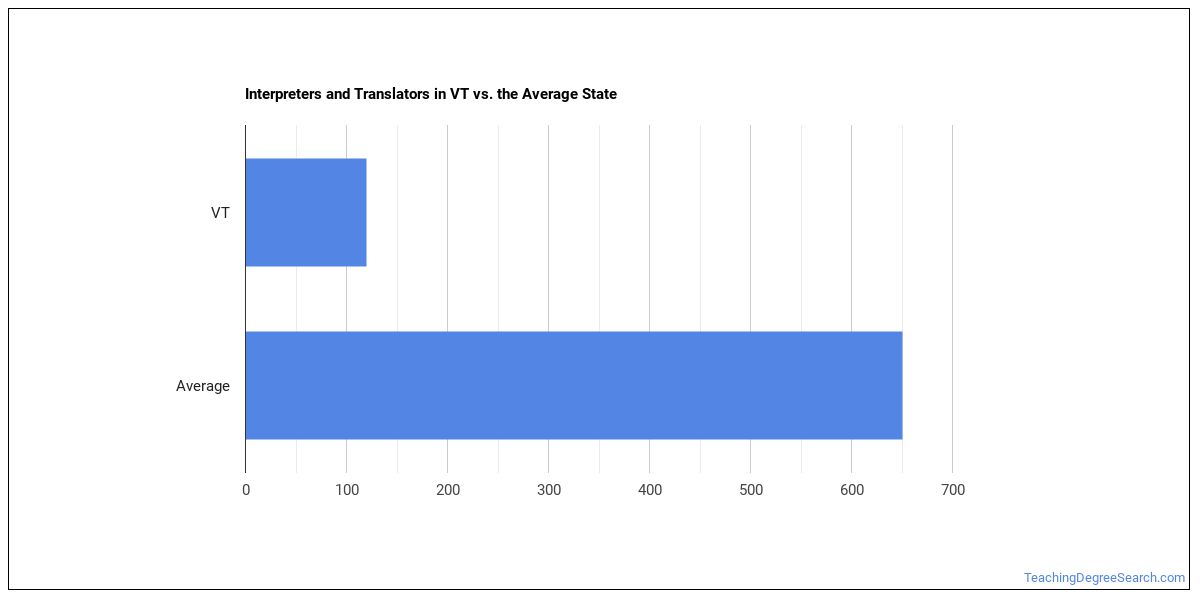
Nationally, total employment in this occupation is 378,567 interpreters and translators in the U.S.. In Vermont alone, about 80 people work in this role. That’s fewer than the typical state, which employs around 540 interpreters and translators.

Top Vermont Metros for Interpreters and Translators
The largest metro-area employers of interpreters and translators in Vermont.
| Metro Area | Number Employed | Annual Median Salary |
|---|---|---|
| Burlington-South Burlington, VT | 50 | $59,390 |
Top States for Interpreters and Translators Employment
These states have the highest employment of interpreters and translators work.
| State | Number Employed |
|---|---|
| California | 6,710 |
| Texas | 5,820 |
| Florida | 4,500 |
| New York | 3,650 |
| Virginia | 2,610 |
| Massachusetts | 2,250 |
| Arizona | 2,040 |
| Illinois | 1,860 |
| North Carolina | 1,800 |
| Georgia | 1,730 |
| Ohio | 1,670 |
| Washington | 1,620 |
| Oregon | 1,220 |
| Wisconsin | 1,190 |
| New Jersey | 1,090 |
| Minnesota | 1,060 |
| Pennsylvania | 1,050 |
| Indiana | 990 |
| Colorado | 890 |
| Maryland | 870 |
Highest-Paying States for Interpreters and Translators
Where interpreters and translators earn the most: interpreters and translators.
| State | Annual Median Salary |
|---|---|
| New York | $84,650 |
| District of Columbia | $81,140 |
| Maryland | $78,350 |
| Virginia | $74,250 |
| California | $73,510 |
| Washington | $69,620 |
| Colorado | $66,590 |
| Utah | $65,990 |
| Massachusetts | $65,490 |
| West Virginia | $63,750 |
Skills
Key interpreters and translators skills, rated on an importance scale of 0 to 5:
Knowledge Areas
Key knowledge areas for this occupation, rated on an importance scale of 0 to 5:
Abilities
Top abilities for interpreters and translators, rated on an importance scale of 0 to 5:
Daily Tasks
Common tasks include:
- Follow ethical codes that protect the confidentiality of information.
- Translate messages simultaneously or consecutively into specified languages, orally or by using hand signs, maintaining message content, context, and style as much as possible.
- Listen to speakers' statements to determine meanings and to prepare translations, using electronic listening systems as necessary.
- Compile terminology and information to be used in translations, including technical terms such as those for legal or medical material.
- Refer to reference materials, such as dictionaries, lexicons, encyclopedias, and computerized terminology banks, as needed to ensure translation accuracy.
- Check translations of technical terms and terminology to ensure that they are accurate and remain consistent throughout translation revisions.
- Identify and resolve conflicts related to the meanings of words, concepts, practices, or behaviors.
- Compile information on content and context of information to be translated and on intended audience.
- Adapt translations to students' cognitive and grade levels, collaborating with educational team members as necessary.
- Check original texts or confer with authors to ensure that translations retain the content, meaning, and feeling of the original material.
- Adapt software and accompanying technical documents to another language and culture.
- Educate students, parents, staff, and teachers about the roles and functions of educational interpreters.
Work Activities
- Interpreting the Meaning of Information for Others
- Establishing and Maintaining Interpersonal Relationships
- Communicating with Supervisors, Peers, or Subordinates
- Updating and Using Relevant Knowledge
- Identifying Objects, Actions, and Events
- Getting Information
- Performing for or Working Directly with the Public
- Documenting/Recording Information
- Making Decisions and Solving Problems
- Communicating with People Outside the Organization
- Evaluating Information to Determine Compliance with Standards
- Monitoring Processes, Materials, or Surroundings
Tools & Technology
Software and systems commonly involved: Hot technologies: Hypertext markup language HTML In-demand technologies: Microsoft Excel
What Major Will Prepare You For This Career?
Several college majors map to this occupation:
- Special Education
Featured schools near , edit
Related Careers
Careers similar to interpreters and translators include:
- Social Science Research Assistants
- English Language and Literature Teachers, Postsecondary
- Foreign Language and Literature Teachers, Postsecondary
- Elementary School Teachers, Except Special Education
- Middle School Teachers, Except Special and Career/Technical Education
- Secondary School Teachers, Except Special and Career/Technical Education
Also Known As
American Sign Language Interpreter (ASL Interpreter), Arabic Translator, Bilingual Interpreter, Bilingual Secretary, Braille Transcriber, Braille Translator, Community Interpreter, Contract Translator, Court Interpreter, Cryptologic Linguist, Deaf Interpreter, Diplomatic Interpreter, Educational Interpreter, English Translator, Farsi Linguist.
References
- U.S. Bureau of Labor Statistics, Occupational Employment and Wage Statistics — https://www.bls.gov/oes/
- O*NET Online — https://www.onetonline.org/
- BLS Employment Projections — https://www.bls.gov/emp/
- O*NET-SOC code: 27-3091.00

TeachingDegreeSearch.com provides higher-education, college and university, degree, program, career, salary, and other helpful information to students, faculty, institutions, and other internet audiences. Presented information and data are subject to change. Inclusion on this website does not imply or represent a direct relationship with the company, school, or brand. Information, though believed correct at time of publication, may not be correct, and no warranty is provided. Contact the schools to verify any information before relying on it. Financial aid may be available for those who qualify. The displayed options may include sponsored or recommended results, not necessarily based on your preferences.
© TeachingDegreeSearch.com – All Rights Reserved.