Special Education Teachers, Secondary School in Hawaii
Considering working as a Special Education Teachers, Secondary School in Hawaii? Here’s what the data says. Teach academic, social, and life skills to secondary school students with learning, emotional, or physical disabilities. Includes teachers who specialize and work with students who are blind or have visual impairments; students who are deaf or have hearing impairments; and students with intellectual disabilities. Excludes “Substitute Teachers, Short-Term” (25-3031).
What do Special Education Teachers, Secondary School Make in Hawaii?
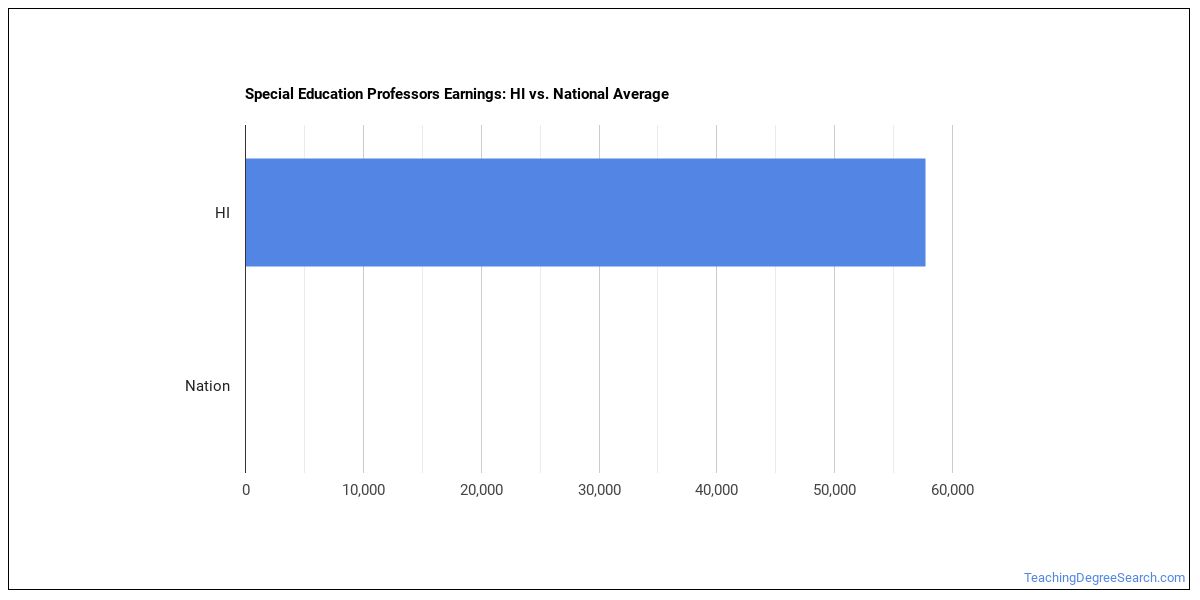
For special education teachers, secondary school working in Hawaii, wages run about $58,660 per year.Annual wages span from $58,240 at the 10th percentile to $78,640 at the 90th percentile.
| Wage Statistic | Annual | Hourly |
|---|---|---|
| 10th percentile | $58,240 | n/a |
| 25th percentile | $58,350 | n/a |
| Median (50th) | $58,660 | $0.00 |
| 75th percentile | $77,850 | n/a |
| 90th percentile | $78,640 | n/a |

Location quotient — how concentrated this career is in Hawaii relative to the national average — is 1.35, meaning that special education teachers, secondary school are more concentrated here than the national average.
National Wage Comparison
Nationally, special education teachers, secondary school earn a median of $79,680 per year ($38.31/hour), lower than the Hawaii median.
Employment Outlook
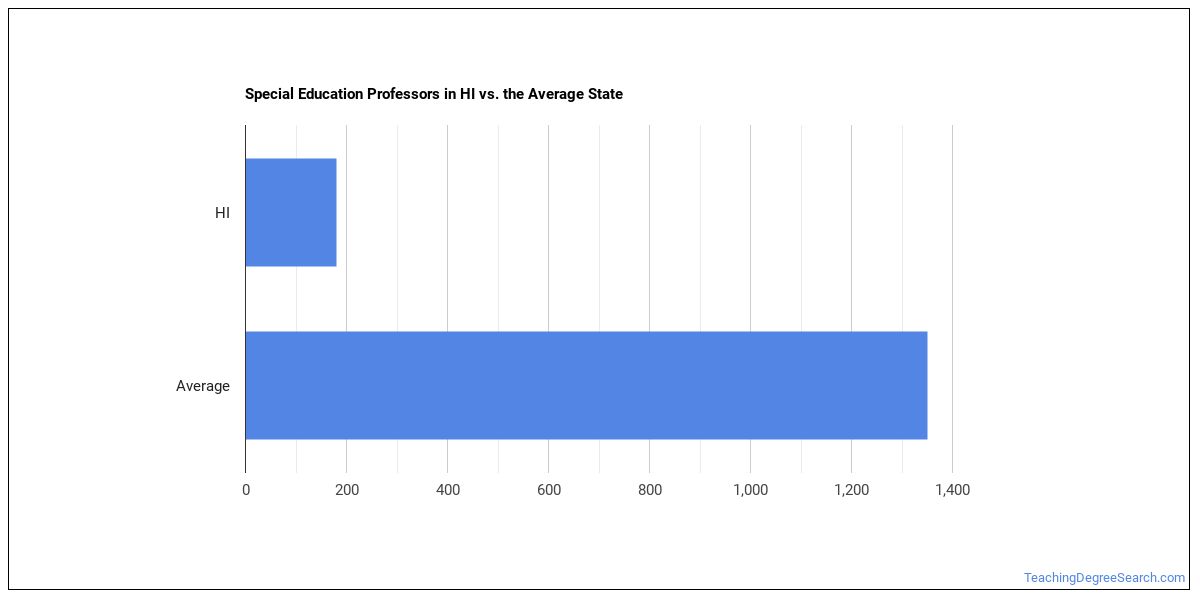
There are roughly 523,995 special education teachers, secondary school in the U.S.. In Hawaii alone, about 880 people work in this role. That’s fewer than the typical state, which employs around 2,000 special education teachers, secondary school.

Top Hawaii Metros for Special Education Teachers, Secondary School
The largest metro-area employers of special education teachers, secondary school in Hawaii.
| Metro Area | Number Employed | Annual Median Salary |
|---|---|---|
| Urban Honolulu, HI | 720 | $58,660 |
Top States for Special Education Teachers, Secondary School Employment
The table below shows the states where the most special education teachers, secondary school work.
| State | Number Employed |
|---|---|
| New York | 17,030 |
| California | 12,190 |
| Ohio | 10,570 |
| Texas | 10,490 |
| Pennsylvania | 10,090 |
| Illinois | 8,890 |
| Florida | 8,250 |
| New Jersey | 7,700 |
| Virginia | 6,040 |
| Minnesota | 4,720 |
| Georgia | 4,180 |
| Massachusetts | 4,050 |
| North Carolina | 4,010 |
| Louisiana | 3,050 |
| Wisconsin | 2,850 |
| Indiana | 2,570 |
| Washington | 2,470 |
| Maryland | 2,450 |
| Colorado | 2,440 |
| Kentucky | 2,350 |
Highest-Paying States for Special Education Teachers, Secondary School
The highest-paying states for special education teachers, secondary school.
| State | Annual Median Salary |
|---|---|
| California | $101,250 |
| Washington | $97,820 |
| District of Columbia | $96,880 |
| New York | $91,830 |
| Rhode Island | $89,460 |
| Massachusetts | $82,580 |
| New Jersey | $80,360 |
| Maryland | $79,370 |
| Oregon | $78,980 |
| Alaska | $78,850 |
Skills
The most important special education teachers, secondary school skills, rated on an importance scale of 0 to 5:
Knowledge Areas
Core knowledge areas for this occupation, rated on an importance scale of 0 to 5:
Abilities
Key abilities for special education teachers, secondary school, rated on an importance scale of 0 to 5:
Daily Tasks
Special Education Teachers, Secondary School typically:
- Establish and enforce rules for behavior and policies and procedures to maintain order among students.
- Maintain accurate and complete student records, and prepare reports on children and activities, as required by laws, district policies, and administrative regulations.
- Confer with parents, administrators, testing specialists, social workers, or other professionals to develop individual educational plans (IEPs) for students' educational, physical, and social development.
- Employ special educational strategies and techniques during instruction to improve the development of sensory- and perceptual-motor skills, language, cognition, and memory.
- Establish clear objectives for all lessons, units, and projects, and communicate those objectives to students.
- Prepare materials and classrooms for class activities.
- Teach socially acceptable behavior, employing techniques such as behavior modification and positive reinforcement.
- Confer with parents or guardians, other teachers, counselors, and administrators to resolve students' behavioral and academic problems.
- Develop and implement strategies to meet the needs of students with a variety of handicapping conditions.
- Teach personal development skills, such as goal setting, independence, and self-advocacy.
- Prepare students for later grades by encouraging them to explore learning opportunities and to persevere with challenging tasks.
- Modify the general education curriculum for students with disabilities, based upon a variety of instructional techniques and technologies.
Work Activities
- Communicating with Supervisors, Peers, or Subordinates
- Establishing and Maintaining Interpersonal Relationships
- Monitoring Processes, Materials, or Surroundings
- Working with Computers
- Organizing, Planning, and Prioritizing Work
- Documenting/Recording Information
- Getting Information
- Training and Teaching Others
- Thinking Creatively
- Making Decisions and Solving Problems
- Updating and Using Relevant Knowledge
- Assisting and Caring for Others
Tools & Technology
Technologies frequently used: Hot technologies: Adobe Acrobat, Adobe Illustrator In-demand technologies: Microsoft Excel
What Major Will Prepare You For This Career?
Programs that train for this career include:
- Special Education
Featured schools near , edit
Related Careers
Other careers like special education teachers, secondary school include:
- Education Administrators, Kindergarten through Secondary
- Educational, Guidance, and Career Counselors and Advisors
- Education Teachers, Postsecondary
- Preschool Teachers, Except Special Education
- Kindergarten Teachers, Except Special Education
- Elementary School Teachers, Except Special Education
Also Known As
Blind Teacher, Braille Teacher, Cross-Categorical SPED Teacher (Cross-Categorical Special Education Teacher), Deaf Teacher, Education Specialist, Emotional Disability Special Education Teacher (ED SPED Teacher), Emotionally Impaired Teacher, Exceptional Children's Teacher (EC Teacher), Exceptional Student Education Teacher (ESE Teacher), HS SPED Teacher (High School Special Education Teacher), Handicapped Teacher, Hearing Impaired Teacher, High School Learning Support Teacher, Inclusion Coordinator, Inclusion Special Educator.
References
- U.S. Bureau of Labor Statistics, Occupational Employment and Wage Statistics — https://www.bls.gov/oes/
- O*NET Online — https://www.onetonline.org/
- BLS Employment Projections — https://www.bls.gov/emp/
- O*NET-SOC code: 25-2058.00

TeachingDegreeSearch.com provides higher-education, college and university, degree, program, career, salary, and other helpful information to students, faculty, institutions, and other internet audiences. Presented information and data are subject to change. Inclusion on this website does not imply or represent a direct relationship with the company, school, or brand. Information, though believed correct at time of publication, may not be correct, and no warranty is provided. Contact the schools to verify any information before relying on it. Financial aid may be available for those who qualify. The displayed options may include sponsored or recommended results, not necessarily based on your preferences.
© TeachingDegreeSearch.com – All Rights Reserved.